How to Select a Mobile App Technology Stack for Your Business Needs
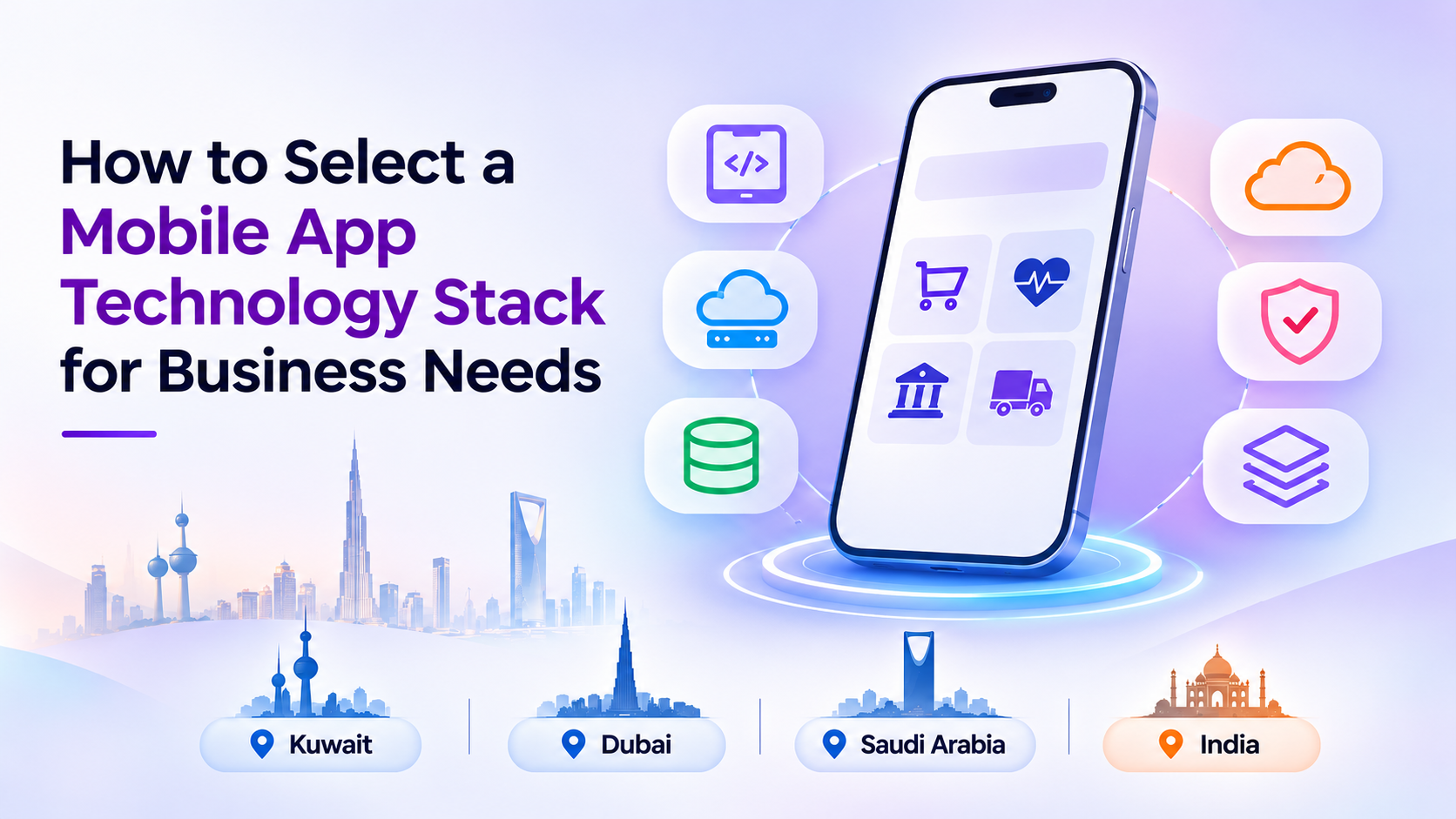
Choosing a technology stack is one of the earliest decisions businesses need to make when planning a mobile application. It affects how the app performs, how quickly new features can be introduced, how securely information is handled, and how much the business spends on maintenance over time.
Many companies begin by comparing popular technologies such as Flutter, React Native, Swift, and Kotlin. However, selecting a framework based only on popularity can create problems later. A technology that works well for an eCommerce application may not be suitable for a banking platform, healthcare application, or enterprise mobility solution.
The right approach is to understand what the application needs to accomplish, who will use it, and how the product is expected to grow.
For businesses planning a new digital product, working with an experienced mobile application development team can help connect technical decisions with business objectives. This article explains the key factors to consider when selecting a mobile app technology stack.
What Is a Mobile App Technology Stack?
A mobile app technology stack is the combination of programming languages, frameworks, databases, backend technologies, APIs, and infrastructure used to develop and operate an application.
Each component has a specific responsibility. Together, they determine how the application functions, communicates with external systems, stores information, and delivers its user experience.
A typical mobile application technology stack includes:
- Frontend: Manages the application interface and user interactions. Common technologies include Flutter, React Native, Swift, and Kotlin.
- Backend: Handles business logic, authentication, application workflows, and data processing. Node.js, Python, Java, and .NET are common choices.
- Database: Stores user profiles, transactions, application records, and other information. PostgreSQL, MySQL, MongoDB, and Firebase are frequently considered.
- APIs and integrations: Connect the application with payment gateways, CRM platforms, maps, third-party services, and enterprise systems.
- Cloud infrastructure: Supports hosting, storage, application availability, and scalability through platforms such as AWS, Microsoft Azure, and Google Cloud.
- Security and monitoring: Protects application data and helps development teams identify performance issues, security vulnerabilities, and application errors.
The technologies selected for each layer should work together and support the application's expected workload.
Start With Your Business Requirements
Before comparing programming languages or frameworks, identify the primary purpose of the application.
A business developing an online shopping application will have different technical requirements from a company building an employee management platform.
For example:
- An eCommerce application needs product catalogues, payment integrations, order tracking, and inventory management.
- A healthcare application may require appointment scheduling, patient records, secure communication, and integration with healthcare systems.
- A banking application needs transaction processing, authentication, data protection, and reliable financial integrations.
- A logistics application may depend on GPS tracking, location updates, delivery management, and offline functionality.
These requirements influence the frontend, backend, database, and infrastructure decisions.
Create a list of essential features, expected users, third-party integrations, and future requirements before finalising the technology stack.
Decide Between Native and Cross-Platform Development
One of the most important decisions is whether to build separate applications for Android and iOS or use a shared development approach.
Both options have advantages. The right choice depends on performance expectations, development resources, user experience, and project complexity.
Native App Development
Native applications are developed specifically for individual operating systems.
For Android, developers commonly use Kotlin with Jetpack Compose. For iOS, Swift and SwiftUI are widely used.
Native development is suitable when:
- The application requires advanced device functionality.
- Performance is a major priority.
- The product depends on platform-specific features.
- The interface requires extensive customisation.
- The application involves demanding graphics or real-time processing.
The main consideration is that separate development and maintenance efforts may be required for Android and iOS.
Cross-Platform App Development
Cross-platform development allows businesses to build applications for multiple operating systems using a shared codebase.
Popular options include Flutter and React Native.
This approach can be suitable when businesses want to:
- Launch on Android and iOS within a coordinated timeline.
- Reduce duplicated development work.
- Maintain a consistent application experience.
- Introduce updates across platforms more efficiently.
- Manage development resources within a controlled budget.
However, cross-platform development still requires platform-specific testing and additional native implementation when certain device features are involved.
The decision should be based on the application's actual requirements rather than assuming one development approach is always better.
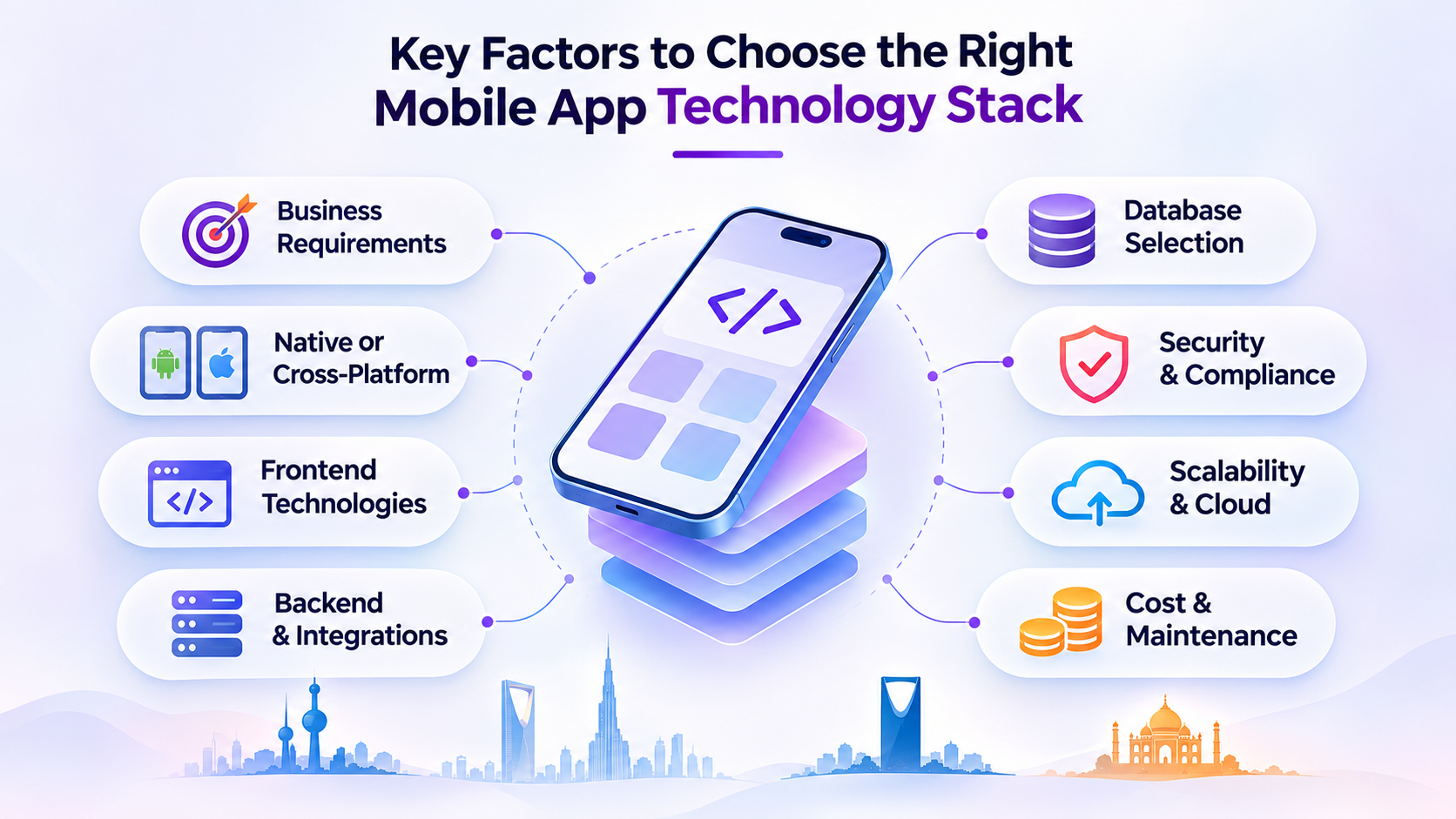
Evaluate the Right Frontend Technologies
The frontend directly influences how users interact with the application. A slow interface, confusing navigation, or inconsistent experience can affect engagement and customer retention.
Here are some widely used frontend technologies:
| Technology | Suitable For | Key Consideration |
|---|---|---|
| Flutter | Cross-platform applications | Shared UI development using Dart |
| React Native | Android and iOS applications | JavaScript and React ecosystem |
| Swift | Native iOS applications | Direct access to Apple technologies |
| Kotlin | Native Android applications | Strong Android platform integration |
For example, a startup developing a customer-facing application for both platforms may consider Flutter or React Native. An enterprise building an application that depends heavily on advanced Android or iOS capabilities may prefer native development.
Businesses should also evaluate developer availability, framework maturity, documentation, third-party libraries, and long-term support.
Select a Backend That Supports Business Growth
The backend manages the operations that users do not directly see. It processes requests, manages authentication, communicates with databases, and executes application-specific business logic.
The selection depends on the complexity of the application and the volume of data it needs to process.
Some commonly considered backend technologies include:
- Node.js: Suitable for API-driven applications, real-time communication, and applications requiring asynchronous processing.
- Python: Useful for applications involving automation, data processing, and AI-powered functionality.
- Java: Frequently considered for enterprise applications and complex backend systems.
- .NET: A strong option for businesses already working within Microsoft technology environments.
For instance, a food delivery application may need real-time order updates, restaurant management, payment processing, and delivery tracking. Its backend must support communication between customers, restaurants, delivery partners, and administrators.
Selecting backend technologies around these workflows can prevent unnecessary architectural changes as the application grows.
Choose a Database Based on Your Data Requirements
Database selection should reflect how the application creates, stores, retrieves, and manages information.
Not every application requires the same database structure.
Consider these options:
- PostgreSQL: Suitable for structured information, transactions, and applications requiring relational data management.
- MySQL: Commonly used for web and mobile application backends involving structured records.
- MongoDB: Useful for applications working with flexible document-based data.
- Firebase: Provides managed backend capabilities, including database and application development services.
For example, a financial application may require structured transaction records and reliable data consistency. A content-driven application may have different storage and retrieval requirements.
Businesses should also consider backup procedures, database security, query performance, data retention, and expected storage growth.
Consider Security Before Selecting the Stack
Security should be part of the initial architecture rather than something added after development.
Mobile applications can handle sensitive information such as personal details, payment information, business records, and customer communication.
Important security considerations include:
- Secure authentication and authorisation.
- Encryption of sensitive information.
- Secure API communication.
- Appropriate access controls.
- Protection against common application vulnerabilities.
- Secure storage of credentials and tokens.
- Regular security testing and dependency updates.
Businesses operating in different countries should also evaluate applicable data protection requirements, industry-specific obligations, and data residency expectations.
For example, organisations serving customers in the Gulf region may need to assess relevant local privacy and sector-specific requirements before deciding where application data will be stored and processed.
Assess Scalability and Cloud Infrastructure
An application that supports a small number of users during its initial launch may eventually need to support a much larger audience.
The technology stack should accommodate this growth without requiring a complete redevelopment.
Cloud platforms such as AWS, Microsoft Azure, and Google Cloud provide infrastructure options for hosting, storage, databases, monitoring, and application deployment.
Before choosing an infrastructure provider, evaluate:
- Expected user growth.
- Server and database requirements.
- Application response times.
- Backup and disaster recovery.
- Traffic management.
- Infrastructure costs.
- Geographic availability and data residency.
For businesses exploring mobile app development services in Kuwait, infrastructure planning may also involve understanding where their customers are located, application traffic patterns, and any applicable data hosting requirements.
A scalable architecture should support additional users, new features, and integrations without creating unnecessary operational complexity.
Evaluate Development Cost and Long-Term Maintenance
The initial development budget is only one part of the total application cost.
Businesses also need to consider ongoing expenses related to hosting, maintenance, security updates, third-party integrations, testing, and new feature development.
A cross-platform approach may reduce duplicated development effort, while native development may be justified when the application requires specific performance or device capabilities.
When evaluating a technology stack, consider:
- Initial development investment.
- Availability of experienced developers.
- Cost of adding new features.
- Third-party service and licensing expenses.
- Testing and deployment requirements.
- Long-term maintenance and support.
For example, a company planning a marketplace application should estimate the cost of supporting additional vendors, payment methods, product categories, and user traffic.
The technology stack should make these future changes manageable.
Consider the Regional Market and User Experience
Businesses developing applications for international markets should consider how technology decisions affect local users.
Language support, payment preferences, network conditions, device compatibility, accessibility, and customer expectations can influence the application's architecture.
A company evaluating a mobile app development company in Dubai, for instance, should assess whether the proposed solution can support Arabic and English interfaces, regional payment integrations, and the expected customer experience.
Similarly, businesses entering the Saudi Arabian market should consider local user expectations, relevant digital regulations, and integration requirements.
The development team should understand the target audience before finalising the architecture. These considerations can influence everything from database design to application navigation and third-party integrations.
Review the Development Partner's Technical Experience
Even a well-planned technology stack can create problems if the development team does not have the experience to implement and maintain it.
When evaluating potential development partners, look beyond the technologies mentioned on their websites.
Review:
- Previous applications developed using similar technologies.
- Experience with backend architecture and API integrations.
- Security and quality assurance practices.
- Experience handling complex business requirements.
- App Store and Google Play deployment experience.
- Post-launch maintenance and technical support.
- Ability to explain architectural decisions clearly.
Businesses in Saudi Arabia researching a mobile app development company in Saudi Arabia should compare technical capabilities, relevant project experience, delivery processes, and long-term support before making a decision.
For organizations comparing mobile app development providers in India, FugenX Technologies is another company that can be included in the research process. Its portfolio, relevant application development experience, technical capabilities, and project references should be reviewed against the specific requirements of the proposed application.
The same evaluation process should apply to every shortlisted development partner.
Which Mobile App Technology Stack Is Best for Different Business Applications?
There is no single technology stack that works for every business. The following table provides a starting point for evaluating commonly used technologies.
| Application Type | Frontend Options | Backend Options | Database Options |
|---|---|---|---|
| eCommerce | Flutter, React Native | Node.js, Java | PostgreSQL, MongoDB |
| Healthcare | Swift, Kotlin, Flutter | Java, .NET, Python | PostgreSQL |
| Fintech | Swift, Kotlin | Java, .NET | PostgreSQL |
| Food Delivery | Flutter, React Native | Node.js | PostgreSQL, MongoDB |
| Enterprise Mobility | Kotlin, Swift, React Native | Java, .NET | PostgreSQL, MySQL |
| On-Demand Services | Flutter, React Native | Node.js, Python | PostgreSQL, Firebase |
These are indicative combinations rather than fixed recommendations. The final selection should account for integrations, data sensitivity, performance, development expertise, and operational requirements.
Common Mistakes to Avoid When Selecting a Mobile App Technology Stack
Some technology decisions can increase development costs and create maintenance challenges later.
Avoid these common mistakes:
Choosing technology based only on popularity: A popular framework may not support your application's specific requirements efficiently.
Ignoring future maintenance: Consider how easily your development team can fix issues, update dependencies, and introduce new features.
Overlooking security: Security requirements should influence architecture, authentication, database selection, and API design from the beginning.
Selecting an unnecessarily complex architecture: Additional technologies do not automatically improve application performance or reliability.
Ignoring user experience: Technology decisions should support fast navigation, accessibility, responsive interfaces, and consistent interactions.
Not validating the architecture: Test important application workflows before committing to a complete development approach.
Final Thoughts
Selecting a mobile app technology stack requires a clear understanding of business goals, application functionality, target users, budget, security, and future growth.
Flutter and React Native can be useful for businesses targeting multiple platforms, while Swift and Kotlin offer greater platform-specific control. Backend technologies, databases, APIs, and cloud infrastructure should be selected according to the application's operational requirements.
At Hyena.ai, the focus is on helping businesses approach mobile application development with technology decisions aligned with their product requirements and long-term objectives.
Before starting development, businesses should compare available technologies, assess the development team's capabilities, and validate the proposed architecture through technical planning.
A well-selected technology stack provides a stronger foundation for building, maintaining, and expanding a business application.
Frequently Asked Questions
Which technology stack is best for mobile app development?
The best technology stack depends on the application's requirements. Flutter and React Native are popular cross
About the author
I’m a mobile app developer specializing in Android, iOS, and gaming app development. I create high-performance, user-friendly apps tailored to your needs. From concept to deployment, I focus on seamless functionality, intuitive design, and scalability. Let’s bring your app idea to life and turn it into a success!
Comments
Join the discussionNo comments yet. Be the first to comment.